
Lim Hung Sets 6×6 Average World Record and Briefly Takes 7×7 Single Record at UniKL MIAT Cube Open 2026
At UniKL MIAT Cube Open 2026 in Malaysia, Lim Hung set a 1:04.94 6×6 average world record and a 1:32.92 7×7 single that briefly held the world record.
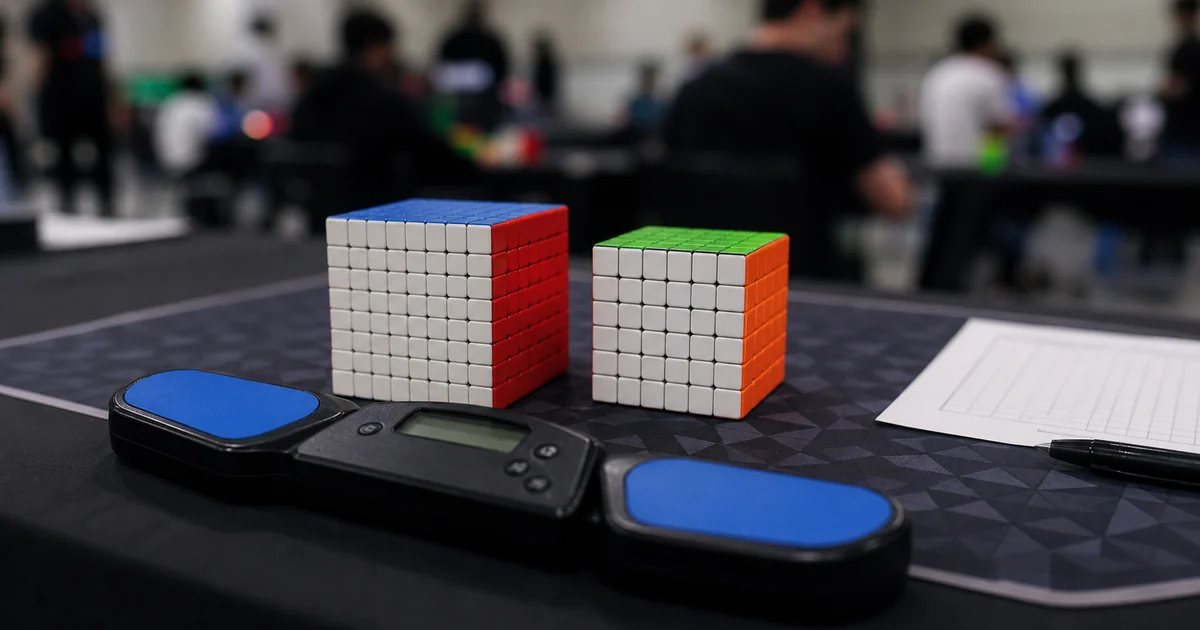
Big-cube speedcubing got faster again at UniKL MIAT Cube Open 2026 in Dengkil, Selangor, Malaysia. On May 10, 2026, Malaysian speedcuber Lim Hung set a 6×6×6 Cube average world record of 1:04.94 and a 7×7×7 Cube single of 1:32.92 that was also a world record at the time. The World Cube Association (WCA) competition page lists both marks in its official highlights. (worldcubeassociation.org)
For cubers who practice big cubes, it was a rare double headline: one result measured repeatable high-level performance across a round, while the other captured a near-perfect execution on a single scramble.
The records, as shown on the WCA pages
The WCA’s competition highlights for UniKL MIAT Cube Open 2026 list:
- 6×6×6 Cube world record average: 1:04.94
- 7×7×7 Cube world record single at the time: 1:32.92
Those headline numbers are backed up by Lim Hung’s WCA profile, which records the UniKL MIAT entries in his world-record history. The 6×6 average remains the standing world-record milestone from the weekend, while the 7×7 single was later surpassed by Max Park, who recorded 1:32.07 at Western Championship 2026 on May 24, 2026. (worldcubeassociation.org) (worldcubeassociation.org)
That update does not make Lim’s 1:32.92 less significant. It shows how quickly 7×7 is moving: Lim took the record from Max Park earlier in May, and Park reclaimed it two weeks later. (speedcubersdigest.com)
Why a 6×6 “average” record is so hard to set
Big-cube singles are always exciting, but an average record is a different kind of statement. It asks for a high-performance solve multiple times in a row, under the realities of a competition round: different scrambles, limited reset time, and the pressure of knowing one mistake can spoil the set.
On 6×6, the main difficulty is that “small” issues multiply:
- Centers and edge pairing amplify hesitation. A brief pause in mid-solve can cost multiple seconds, especially if it disrupts lookahead.
- Turning speed is only useful with control. Big cubes punish imprecise turning with lockups and regrips.
- Execution has more phases to keep clean. Efficient reduction, stable transitions, and consistent 3×3 stage performance all matter.
That’s why average records often feel like a preview of where the entire top field is heading next: once one person can repeat a pace in a round, others tend to follow.
What the 7×7 single signaled
A 7×7 single like Lim Hung’s 1:32.92 highlights something different: a best-case solve under official conditions. Even if it’s “just one scramble,” a result at that level still requires:
- A scramble that rewards the solver’s strengths (without being a fluke)
- Near-error-free reduction and pairing
- Strong composure through the last transition into 3×3 stage
On 7×7, that last transition is often where a single can be won or lost. One awkward edge pairing decision or a small turning mistake can swing the time dramatically.
The WCA listing of the result as a world record at UniKL MIAT matters because it is the sport’s official standard. Lim’s solve was recognized in the same results system as every other record, not just in social media reaction or unofficial rankings. (worldcubeassociation.org)
Context: big-cube records keep compressing
In the past few years, big-cube record progression has increasingly looked like 3×3 progression used to: periods of rapid drops punctuated by short plateaus. It’s a mix of factors:
- Better hardware (especially magnetic stability and smoother, controllable turning)
- More competition depth in multiple regions
- Higher-quality practice structure, including big-cube specific efficiency training rather than only raw turning drills
UniKL MIAT Cube Open 2026 is a good example of how records can come from a variety of places on the calendar. A world record does not have to wait for a world championship-level headline event; it can happen anywhere the WCA conditions are met and the performance is there. (worldcubeassociation.org)
What to watch next
If you’re following big-cube progression as a competitor (not just a fan), there are a few practical angles worth watching after a record like this:
- Whether the new averages become “normal” for finalists. A record average often signals a new sustainable pace at the top end, not a one-off ceiling.
- How quickly 7×7 trades records again. The gap between Lim’s 1:32.92 and Park’s later 1:32.07 shows that the event is still compressing at the very top.
- Whether other events at the same competition show a trend. WCA competition pages frequently surface additional continental records or standout podium results in their event tables and highlights.
For a clear overview of the weekend, the WCA competition page and Lim Hung’s official WCA profile are the two most reliable sources to revisit. For the later 7×7 update, Western Championship 2026’s WCA highlights list Park’s 1:32.07 as the new world record single. (worldcubeassociation.org) (worldcubeassociation.org)
Key takeaways
- Lim Hung set a new 6×6 world record average of 1:04.94 at UniKL MIAT Cube Open 2026 in Malaysia. (worldcubeassociation.org)
- He also set a 1:32.92 7×7 single that was the world record at the time and has since been surpassed by Max Park’s 1:32.07 at Western Championship 2026. (worldcubeassociation.org)
- Official verification is available through the WCA competition page and Lim Hung’s WCA profile record history. (worldcubeassociation.org)