
How to Solve a 2x2 Rubik's Cube for Beginners
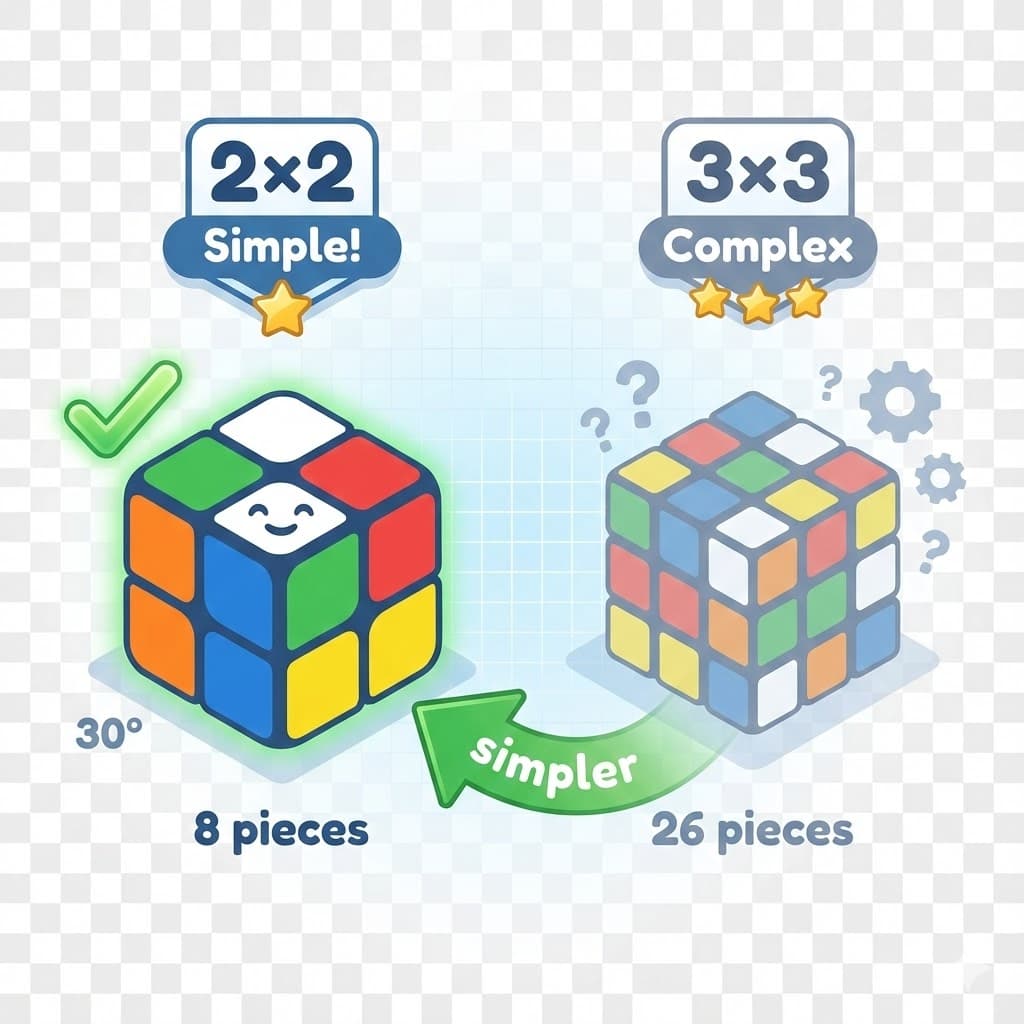
The 2x2 Rubik's Cube (also called the Pocket Cube) is a useful starting point for beginners. With only 8 corner pieces and no edges, this 2 by 2 cube is simpler than the 3x3 while still teaching notation, layers, and algorithms.
Last reviewed: by the Cubzor Editorial Team.
Match your cube first
What does your 2x2 look like right now?
Pick the closest state before reading the full method. The right next step depends on whether you have a solved layer, positioned corners, or a cube that does not match a 2x2 beginner case.
What You'll Learn
- Why the 2×2 is easier than the 3×3 cube
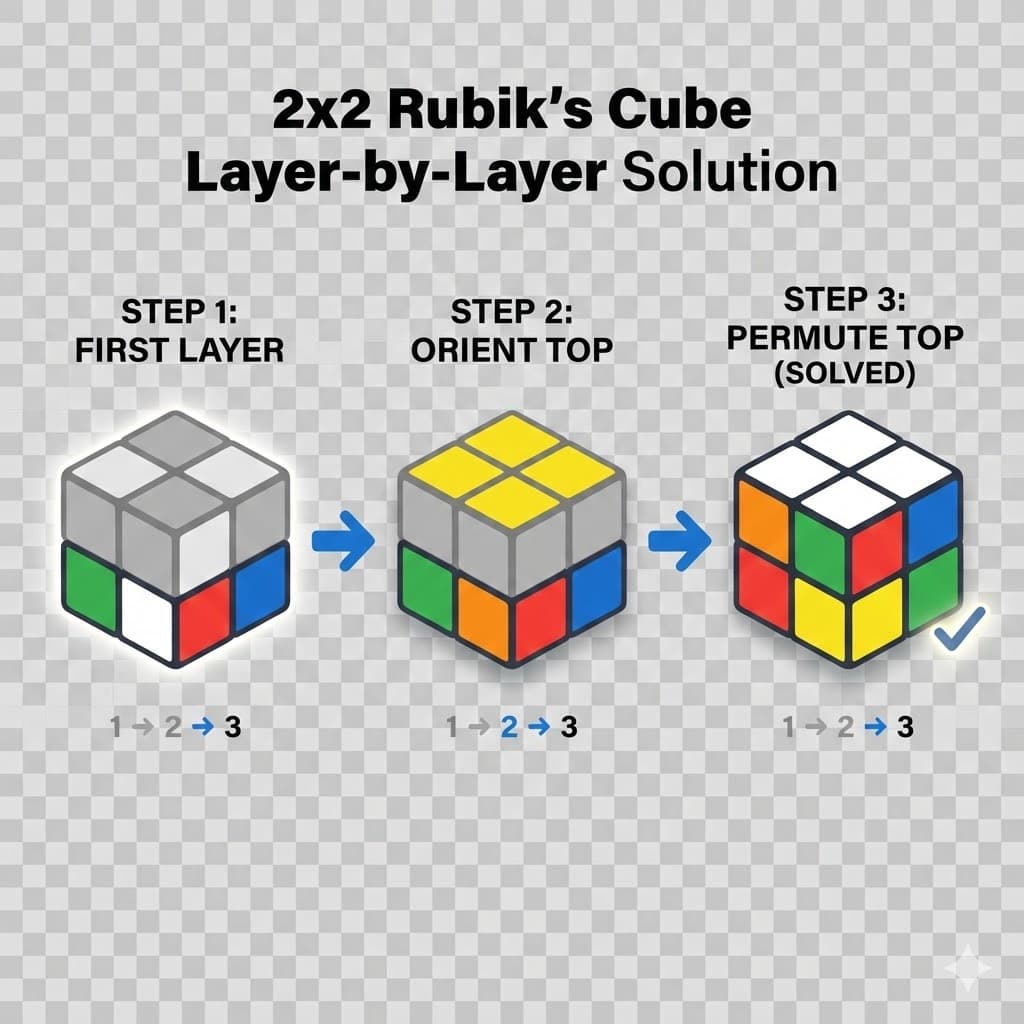
- The 3-step beginner method for the Rubik 2x2
- Essential algorithms using mostly R and U triggers, plus one corner-positioning algorithm
- Tips for progressing to the 3×3 cube
Understanding the 2×2 Cube: Core Concepts
Before solving, understand these key differences from the 3×3 cube:
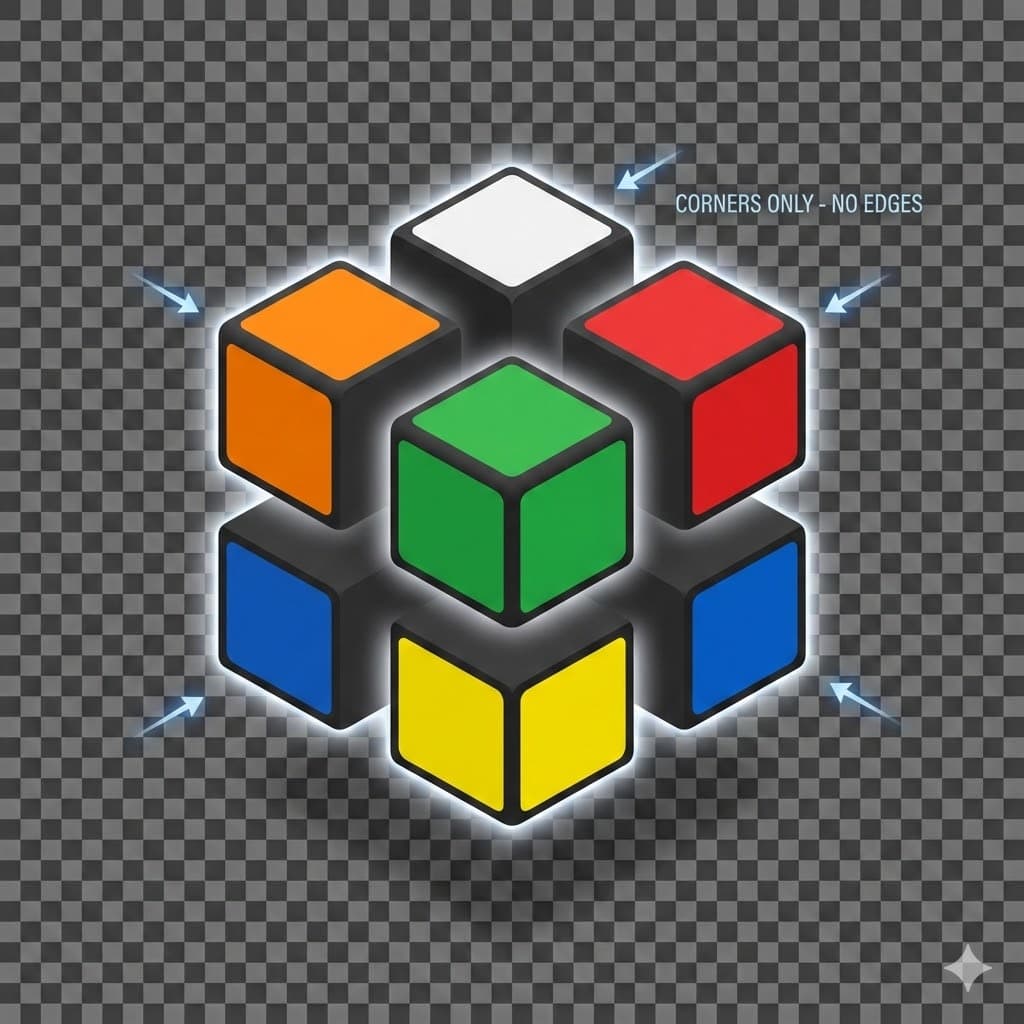
No Edge Pieces = Simpler Solving
- ✓The 2×2 has only 8 corner pieces (no edges or centers)
- ✓Each piece has 3 colored stickers
- ✓This makes it much easier to learn than the 3×3
Any Color Can Be the 'First Layer'
- ✓Unlike the 3×3, there are no fixed center pieces
- ✓You can start with any color as your first layer
- ✓By convention, we'll use white as the first layer
Same Concepts as 3×3, Just Simpler
- ✓Layer-by-layer solving approach still applies
- ✓Algorithms are similar to 3×3 corner algorithms
- ✓Learning 2×2 prepares you perfectly for 3×3
Reading 2×2 Notation: Simplified
The 2x2 uses the same notation as the 3x3. This beginner path mostly uses R and U triggers, plus one positioning algorithm that includes L moves:
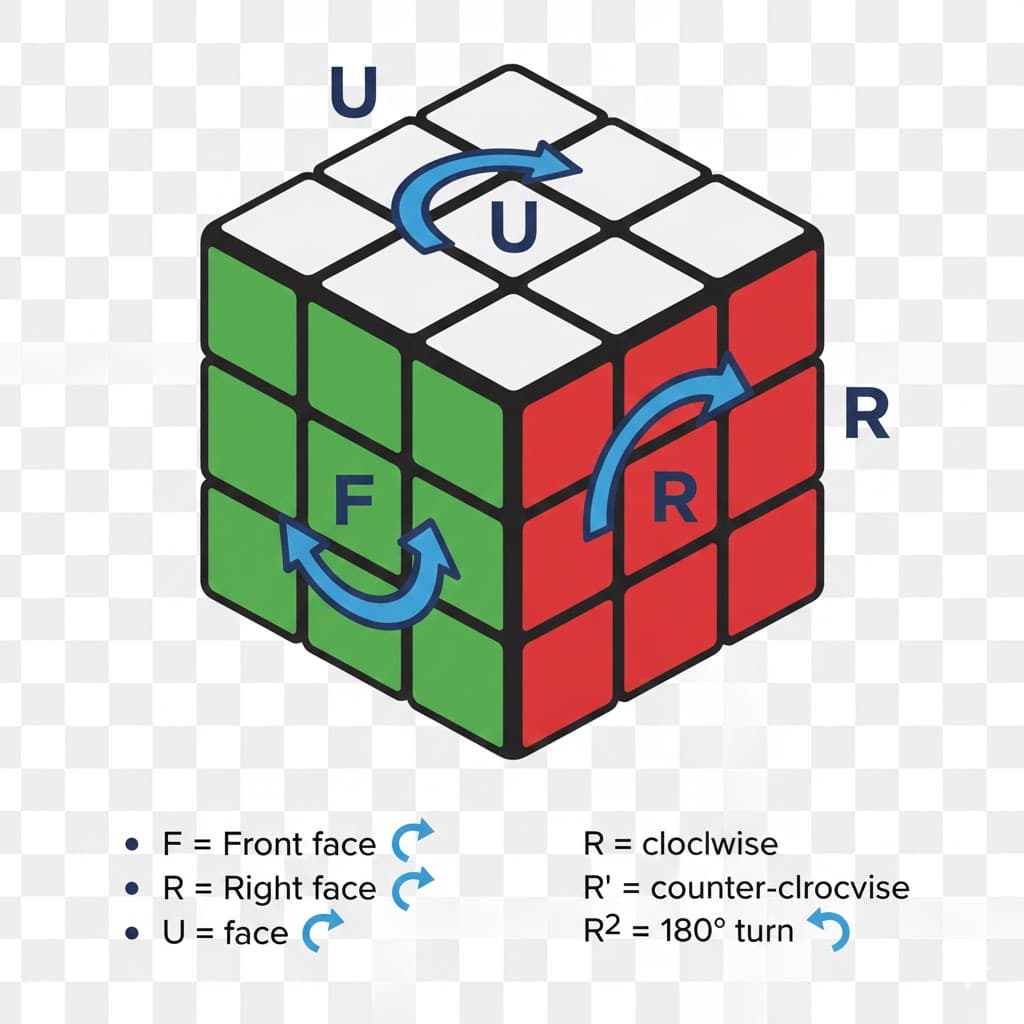
🎯The Three Main Faces:
Fface toward youRright-hand faceUtop face⚡The Symbols:
RR = Turn right face clockwise 90°R'R' = Turn right face counterclockwise 90° (apostrophe = counter)R2R2 = Turn right face 180° (direction doesn't matter)💡 Note: L, D, B, and F moves still exist. This guide keeps the main trigger simple, but the corner-positioning step uses L moves too.
The 3-Step Solution
Follow these simple steps to solve your 2×2 cube:
Goal: Complete one full layer with all corners matching their adjacent colors. Choose white as your bottom layer. Use intuitive moves and the basic algorithm R U R' U' to position and orient corners. If a corner is in the right position but twisted, use R U R' U' repeatedly (up to 3 times) until it's correctly oriented.
✓ Success Check: You should have one complete layer (4 corners) with all colors matching on three sides.
Goal: move the top-layer corners to their correct positions before orienting them. Count how many top pieces are already in the correct position by matching their side colors to the solved layer. If one corner is correct, hold it at the front-right. Apply U R U' L' U R' U' L, then check again. Repeat until all four top corners are in the correct positions.
✓ Success Check: All four top-layer corners should be in their correct positions, even if the yellow stickers are not facing up yet.
Goal: twist the positioned corners so the last face becomes solved. Turn the cube over so the unsolved layer is on the bottom. Hold an unsolved corner at front-right and repeat R U R' U' until that corner is oriented. Turn only the bottom layer to bring the next unsolved corner to front-right, then repeat until the cube is solved.
✓ Success Check: Congratulations! Your 2x2 cube should now be completely solved with all faces showing solid colors.
Complete 2×2 Beginner Method Algorithms
| Step | Goal / Action | Algorithm / Key Moves | Notes |
|---|---|---|---|
| Step 1: Solve First Layer (White Face) | Solve First Layer (White) | R U R' U' | Use intuitive moves and R U R' U'. Repeat up to 3x to orient corners. |
| Step 2: Position Last Layer Corners | Position Last Layer Corners | U R U' L' U R' U' L | Use U R U' L' U R' U' L until all last-layer corners are positioned. |
| Step 3: Orient Last Layer Corners | Orient Last Layer Corners | R U R' U' | Use R U R' U' on the front-right corner, turning only the bottom layer between corners. |
Common Mistakes Beginners Make
Trying to Solve Face-by-Face
Just like the 3×3, you need to solve layer-by-layer, not face-by-face. Each corner must match all three adjacent colors.
Forgetting Which Layer is 'First'
Since there are no center pieces, it's easy to lose track. Keep your solved layer on the bottom throughout steps 2 and 3.
Applying Algorithms Too Quickly
The 2×2 is small and turns easily, but rushing algorithms leads to mistakes. Learn the moves slowly and build speed gradually.
Expecting to Solve in One Attempt per Step
The last two steps often require repeating an algorithm and checking the case again. This is normal; finish each algorithm completely before deciding what to do next.
FAQs & Pro Tips
Yes! The 2×2 is significantly easier because it has no edge pieces and uses fewer algorithms. It's the perfect puzzle to learn before tackling the 3×3.
Ortega is a faster 2x2 method that solves one face, orients the opposite face, and then permutes both layers. Learn this beginner method first; move to Ortega after you can solve the Pocket Cube without pausing to remember each step.
Yes! The 2×2 is essentially just the corners of a 3×3. Any 3×3 corner algorithm works on the 2×2, which is why learning the 2×2 is great preparation for the 3×3.
The 4-move sequence (R U R' U') twists the corner in the front-right slot while cycling temporary changes around the cube. Always finish all four moves, then turn only the bottom layer to bring the next unsolved corner into position.
Make sure you're checking position before orientation. A corner is positioned correctly when its side colors match the nearest colors on the solved layer. If one corner is correct, hold it at front-right and apply U R U' L' U R' U' L; if none are correct, apply it once and check again.
It's not required, but highly recommended! The 2×2 teaches you fundamental concepts (notation, layer-by-layer solving, algorithm execution) in a simpler context, making the 3×3 easier to learn.
Absolutely! Since there are no fixed centers, any color can be your first layer. We use white in this guide for consistency, but feel free to choose your favorite color.
Once you can consistently solve the 2x2 Rubik's Cube, start the 3x3 beginner guide or practice the same notation on the virtual cube. Searches like Rubik 2x2, 2 by 2 cube, and even 2by2 rubix cube usually mean this same Pocket Cube; after the beginner method, Ortega is the next useful 2x2 speed method.
🚀 Next Moves
Learning Resources
- World Cube Association (WCA)– Official 2×2 competition rules and world records.
- SpeedSolving.com Wiki– Advanced 2×2 methods (Ortega, CLL, EG) and community discussion.